

 Vietnamese
  日本語
日本語  English
 Sapo: Choosing cat litter directly affects respiratory health, paw comfort, litter-box habits, and your monthly costs. This article compares three common types — clumping clay, wood pellets, and silica gel — through the lens of “clean and cost-effective,” with practical tips to keep the box dry, low-odor, and cat-friendly.
Criteria for choosing cat litter: clean, safe, cost-effective
Ask yourself four things: does it control odor effectively (reduces ammonia smell instead of masking it with perfume), is the dust level low (fine dust easily irritates kittens or cats with respiratory issues), is cleaning tidy and simple (limits sticking to the bottom and avoids crumbling when scooped), and how does it feel under paws (grains that are too large/sharp can make cats avoid the box). When these four factors are in balance, you’ll use less litter and your living space will stay fresher.
Clumping clay (bentonite/clay): familiar, easy to clean, budget-friendly
Its standout advantage is forming firm clumps on contact with urine, letting you remove soiled parts quickly while the rest stays dry and clean. This is a “safe” choice for multi-cat households because the box looks tidy, odor stays stable, and the price is generally reasonable. Choose fine-to-medium grains for a softer paw feel.
Watch out for dust: some lower-priced lines are dusty, stick to fur, and linger in the air. Heavier grains can also be kicked out of the box; placing a tracking mat in front helps a lot. For economy, keep the litter depth around 7–8 cm to avoid sticking to the bottom; scoop right after your cat goes and top up instead of replacing the whole box too soon.
Best for: homes with 1–3 cats, prioritizing quick maintenance and a consistently dry box. Not ideal if your cat is respiratory-sensitive and you haven’t found a low-dust formula yet.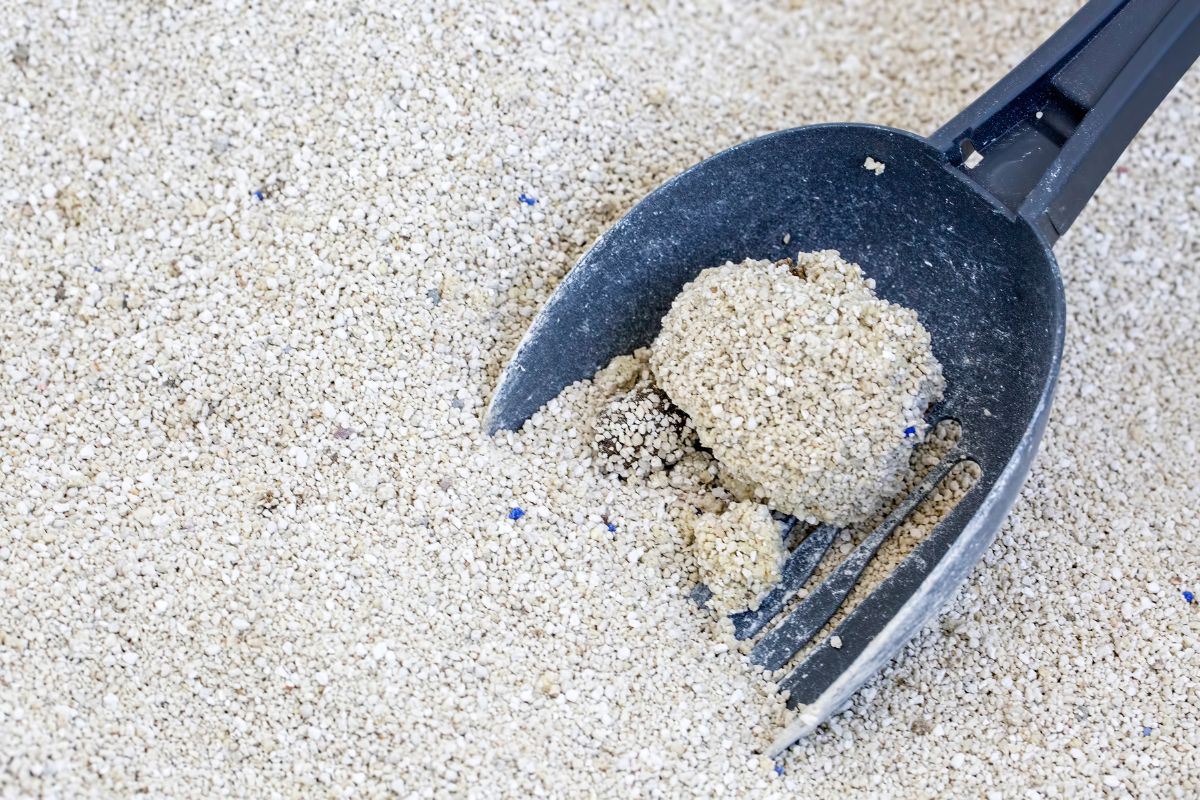
Wood pellets: natural, low-dust, gentle wood scent
Compressed wood pellets absorb moisture well; when wet they break down into sawdust, locking odor in a natural way and keeping the space feeling “dry and airy.” They’re very low-dust, lightweight, and many products are biodegradable.
The trade-off is that they don’t clump, so the cleaning method is different: use a two-tray system so sawdust falls to the lower tray, then discard it periodically. Some cats may find the larger pellets unfamiliar or slightly “pokey.” If you prefer clean air, dislike strong fragrances, and don’t mind learning the sift-and-dump routine, wood pellets balance cleanliness with sensible cost. A small tip: stir the pellets daily so sawdust drops faster and the surface stays dry.
Best for: small apartments that prioritize low dust, owners who like natural materials. Not ideal if you want the super-fast “scoop a clump” workflow of clay.

Silica gel (silica): strong odor control, longer change intervals, low dust
Silica crystals are porous, so they absorb moisture and trap odor very well; many even change color to indicate saturation so you know when to replace them. They’re low-dust, lightweight, and usually have longer change cycles, suiting busy schedules.
Downsides: they don’t clump, so you still need to scoop feces; the crunchy feel and larger granules can bother some sensitive cats. Per-bag cost can be higher, but the reduced replacement frequency helps balance it out. If you prioritize strong odor control and minimal daily effort, silica is a strong candidate.
Best for: people out at work all day, closed spaces needing robust odor control. Not ideal if your cat dislikes large, crunchy granules or if you prefer clearly defined clumps to scoop.

Quick comparison table
|
Criteria |
Clumping clay |
Wood pellets |
Silica gel |
|
Odor control |
Good, depends on clumping quality |
Fair, gentle wood scent |
Excellent |
|
Dust level |
Low to high (choose low-dust) |
Very low |
Very low |
|
Ease of cleaning |
Very easy (scoop clumps) |
Moderate (sift sawdust) |
Easy (scoop feces, stir) |
|
Paw feel |
Fine–medium, soft |
Large pellets, slightly “pokey” |
Large, crunchy |
|
Monthly cost* |
Low–medium |
Low–medium |
Medium–high |
*Costs depend on the number of cats, cleaning habits, and each brand’s quality.
Choose based on real-world context
For closed, odor-sensitive apartments: prioritize silica or low-dust clumping clay. For multi-cat homes: clumping clay lets you scoop quickly after each visit and limits lingering smells. For kittens or cats with respiratory history: choose wood pellets or ultra-low-dust clumping clay, and avoid strong fragrances. With any type, aim for number of boxes = the number of cats + 1, place boxes in quiet areas away from feeding stations and strong drafts.
Tips to keep it clean and cost-effective
Maintain 7–8 cm of litter to prevent urine from sticking to the bottom. Scoop daily and stir periodically so that damp granules rise to the top for easy removal. Avoid mixing multiple litter types at once, as cats may “boycott” the box. If switching, blend the new type gradually over 7–10 days. A tracking mat in front of the box will significantly cut sweeping time.

If your cat has had urinary issues (frequent small pees, sharp odor recurring even with a clean box), keeping the right litter setup should go hand-in-hand with a urinary-support diet. You can consider Vet’s Selection pH Care Plus Stage for Cat — a formulated food that helps control urine pH and supports lowering the risk of recurrent lower-urinary problems in cats.
There isn’t one “best” litter for every home — only the best fit for your cat and your cleaning routine. If you want fast maintenance and friendly costs, try low-dust clumping clay. If you prefer a natural feel and cleaner air, wood pellets are pleasant once you adapt to the two-tray system. If you need heavy-duty odor control and longer intervals between changes, silica gel excels. Whichever you choose, a clean box, a calm location, and mindful observation of litter-box habits are the keys to a healthier cat and a consistently fresher home.